
Hello Everyone!
Welcome to another edition of the Meet the Author series. I am back on this series after a long time. I am very excited to have Emma Duval, author of Unwed and Unbothered: The Defiant Lives of Single Women throughout history, on this Q and A
I first came across her work a few years ago on social media, when she was collating and editing essays on Childfree Christmas traditions in Childfree Magazine. Since then, I have followed her on social media, interacted with her on several occasions . I have always enjoyed her insightful and thoughtful posts.
It’s an absolute joy to have Emma on this Q and A.
Without further ado, let’s get to know the person behind the book and posts.
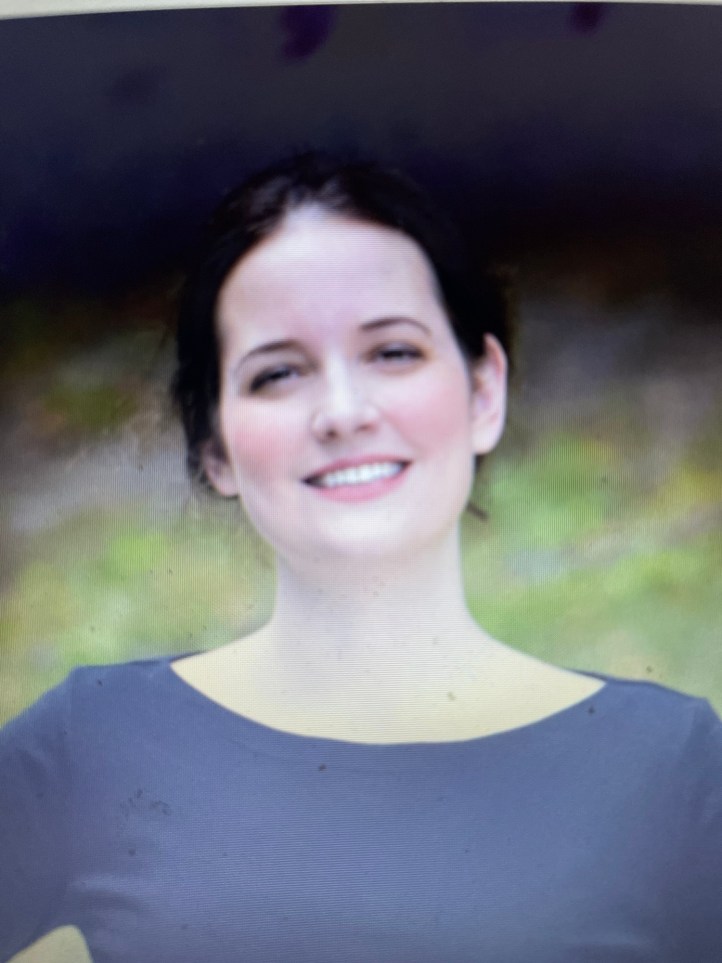
Meet Emma Duval , author Ilustrator.
Usha: Welcome Emma. Tell us a little bit about yourself and 2 fun facts about.
Emma : Hi, I’m Emma. I’m an author-illustrator whose first book, Unwed & Unbothered: The Defiant Lives of Single Women Throughout History which was published in September 2025.
I go by @MillennialEmma, a username I chose because I wanted it to reflect two things: my identity as a member of the “millennial” generation—which has helped popularize the growing childfree-by-choice movement—and the fact that women without children have existed for thousands of years—millenniums, really.
Two Fun facts about me:
- I have grown up in three different countries. Luxembourg, the US and France. When I speak French I get asked “Where am I from?2 Apparently, I have an accent when I speak French.
- In the last few years, I have developed a fascination for Home Improvement.
Usha: What genre do you prefer reading, and do you have a favourite genre?
Emma: My two favorite genres are novels and graphic novels (those count, right?). I’m especially drawn to 19th-century historical novels that, while fictional, reflect the political and social issues of their time such as Émile Zola’s L’Assommoir (1877), Gustave Flaubert’s Madame Bovary (1856), and Willa Cather’s My Ántonia (1918).
As I write this, I’m realizing these all belong to the literary realism movement and explore the struggles of working-class and middle-class women. I guess I’m fascinated by how people, across eras and cultures have faced similar challenges: heartbreak, social pressure, financial hardship, and the search for belonging.
Another genre I love is the murder mystery, whether it’s a classic by Agatha Christie or a contemporary thriller like Paula Hawkins’ The Girl on the Train (2015). A truly gripping mystery that keeps you turning the pages is such a rush (and makes commuting on public transit more enjoyable!).
And I have to give a special shoutout to graphic novels and mangas. They can be a wonderful way to rediscover reading or explore complex topics in a visual way. I’m thinking of Persepolis (2007) by Marjane Satrapi, a moving autobiographical account of growing up in Iran after the 1979 Revolution, or The Rose of Versailles (1973) by Riyoko Ikeda, set during the French Revolution, following the intertwined lives of Queen Marie Antoinette and Lady Oscar.
Usha: What do you prefer: paperback, hardback, or e-books?
Emma: That’s a tough one because I love each format for different reasons.
E-books are unbeatable for convenience, especially when travelling. They save your place automatically and take up no extra space. Paperbacks, on the other hand, are the most comfortable for reading in bed: I can switch positions endlessly, and if I accidentally drop the book on my face, it hurts less than a hardback or a phone!
Still, I have a soft spot for hardbacks. Despite their weight, they feel so elegant. Some of my favourite books in my collection are hardbacks: Malika Favre (2019), a stunning art book showcasing the illustrations of said artist, and Persuasion: An Annotated Edition by Robert Morrison (2011), which provides rich historical context and commentary on Jane Austen’s Persuasion.
Usha: What was the first book you read that you remember/left an impression on you?
Emma: The Sisterhood of the Traveling Pants (2001) by Ann Brashares and Little Women (1868) by Louisa May Alcott were two books I read around the same time in my early teens. My friends and I borrowed The Sisterhood of the Traveling Pants from the school library, reading it and passing it to each other one after another, while Little Women was assigned reading for class.
Despite one being for fun and the other for school, both stories stayed with me because of their coming-of-age themes and the powerful bond of female friendship and sisterhood. At that age, my friends were my whole world, so those stories really resonated.
Usha: What is the most surprising thing you learnt while writing this book?
Emma: One of the most eye-opening realizations was how women’s lives share striking similarities across centuries and cultures. Although each person’s story is shaped by their environment, the overarching themes of independence, resilience, and the challenges of carving out one’s place in society transcend cultural or religious differences. It’s quite amazing to see how universal these experiences truly are.
Usha: What is the story behind the title of your book?
Emma: I have to thank the wonderful team at Andrews McMeel for coming up with this catchy title! I had originally suggested something straightforward, like Single Women Throughout History, but it felt a bit too plain. The publisher’s team proposed Unwed & Unbothered, which immediately felt right. It perfectly captures the spirit and confidence of the book, and the alliteration adds just the right touch of flair.
Usha: If you could choose one literary figure from the past or present to meet and chat with, who would it be?
Emma: Not all writers are great conversationalists (myself included), so I’d want to meet someone who could carry the conversation for both of us! I think Marguerite Yourcenar would be fascinating because of her intellect and poise, which are evident in recorded interviews.
That said, I’d also love to talk to Agatha Christie about how she plotted her mysteries and what she’d do with modern-day technology. Would it make her stories harder to write or would it give her even more opportunities for creative twists?
Usha: That will be an interesting conversation, mysteries and modern-day technology. Apologies for my ignorance, I had to look up Marguerite Yourcenar, for those like me she was a Belgian French writer and essayist.
Usha: How important was writing this book?
Emma: This book began as a personal journey, an opportunity to explore the often-overlooked history of women without children. In many ways, it has helped me feel more confident in my own choices. I can now look back and say, “See? Look at all these incredible women who didn’t follow the traditional path of marriage and motherhood, and still led fulfilling, impactful lives.” It’s empowering because it’s tangible: these women existed, and their achievements and influence are undeniable.
Although I’m married myself, I have immense admiration for these women and the ways they carved out space for themselves in societies that were often antagonistic towards them. Researching and writing their stories became a way for me to process my own feelings about being a childfree woman, and to find the strength to use my voice in advocating for others like me.
Usha: What’s your favourite and least favourite part of writing a book?
Emma: My favorite part was definitely the research, which would technically be “pre-writing,” I suppose. I loved discovering stories, connecting dots, and diving deep into different time periods.
The hardest part came later, during revisions, after 80% of the manuscript was done. Restructuring chapters, cutting sections, and rewriting biographies was exhausting. I think most writers agree: the beginning is thrilling, the middle is tough, and reaching the end is about endurance.
Usha: Writing or illustrating? What do you prefer
Emma: I naturally gravitate toward illustrating, it’s my true creative outlet. Writing, for me, serves more as a tool to complete the narrative when illustration alone can’t fully express an idea. Together, they balance and complement each other, but drawing is definitely where I feel most at home.
Usha: There is a lot of research involved, how easy or difficult was it find these women?
Emma: At first, it felt overwhelming. I didn’t quite know where to start so I began by listing famous women I already knew, then slowly expanded from there. One discovery led to another, and before I knew it, the list had grown into something much larger and more interconnected than I ever expected.
Usha: What next, where would you like to venture out now ?
Emma: I’d love to continue exploring and illustrating women’s history. My next goal would be a project centered on childfree and childless women, perhaps examining how they’ve represented themselves through their own work, whether in art or literature. I’m also intrigued by the idea of a follow-up to Unwed & Unbothered, this time focusing on the childfree experience throughout history.
A follow up indeed would be great. Thank you so much Emma, for sharing your writing journey and agreeing to be part of this Q and A. Its been an honour and pleasure to have you on this series. You have given me a few more books to add on to my reading list, more authors to explore and whole new genre( Manga) to venture in to.
Find out more about Emma
Do give her a follow on her Instagram page and read her insightful posts
Emma Duval (@millennialemma) • Instagram photos and videos
That’s all from me folks on this edition of Meet the Author. Until next time, Happy reading.

 Le Coin Des Bobby