
Hello All !!
Welcome to another edition of Meet the Author. This year I have been hosting these sessions more sporadically, letting them unfold organically rather than following a set schedule. Today I am very thrilled to introduce Rose Diell, an author I had the pleasure of getting acquainted through Nicole Louie author of Others Like me. There is a common thread connecting Nicole Louie, Rose and me, we are women who don’t have children.
Rose has recently published Fledging, a fiction exploring the complex “baby question”. It was an absolute delight meeting her in person, chatting with her about her then upcoming book.Rose describes herself as people-watcher, story-lover, reader, traveller, language-collector and writer looking for magic in the everyday.
At her book launch, I felt a deep sense of joy seeing her surrounded by family and friends, celebrating her achievement. In a world where motherhood is often considered a woman’s greatest accomplishment, it was incredibly moving to witness her book being honored with the same joy and pride as one might see at a baby shower.
Without much ado, let’s meet Rose Diell.
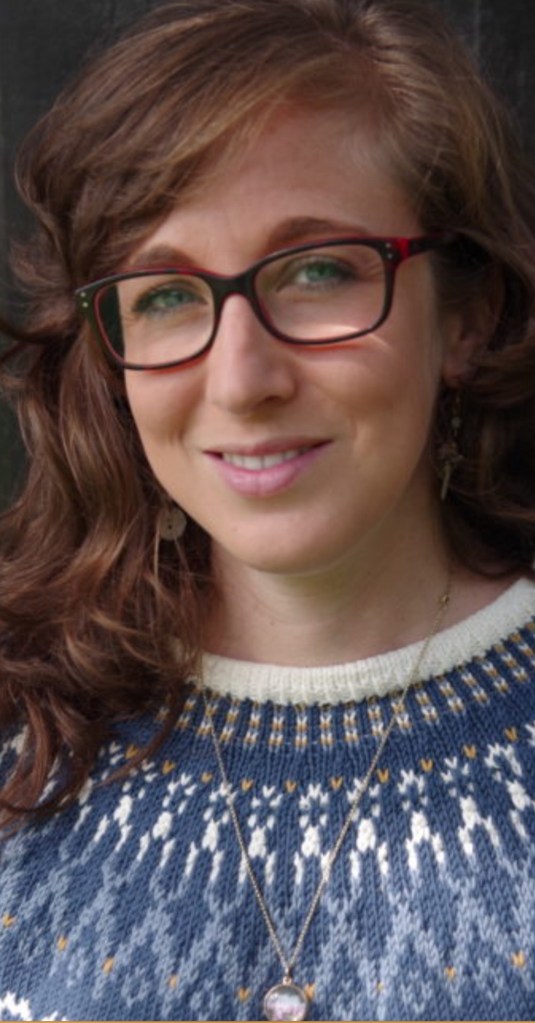
Usha: Welcome Rose !! Its is an absolute delight to have you here. Please could you introduce yourself to our readers?
Rose: I like stories that surprise and inspire me, that speak to my heart and leave an impression for days and weeks afterwards. I saved my first novel – for children – on a floppy disk when I was thirteen years old. Only my mum will ever appreciate its brilliance because it’s stayed in a drawer ever since.
Two Fun facts :
- Growing up I loved Roald Dahl books and Matilda was my favourite, because she also loved reading. People often say I look like Mara Wilson, who played Matilda in the movie. I have spent a lot of time in my childhood staring at things trying to move them.
- I am a lover of language and asides from English I can speak Italian, French, and Arabic. I really admire anyone who writes in a language other than their mother tongue.
Usha : Lets dive in to the Q and A
Usha: What genre do you prefer reading and do you have a favourite genre?
Rose: I’d say my preferred genre is ‘accessible literary’ which can also be referred to as ‘upmarket’ and has links to ‘bookclub fiction.’ I love books that are beautifully written and thoughtful, but I don’t want them to be too much work and though I do find it interesting to read things that are a bit more experimental from time to time, I find the books that resonate with me most are a bit more accessible. That’s also why I write in this category – and why that’s where Fledging sits!
Within this, I read quite widely but am always attracted to things that are a bit quirky or surreal, including magical realism. Growing up I always read fantasy, then as I got older I wanted stories that captured real life a bit more – so I guess for me, magical realism is the perfect crossover. I did use to read a lot more mystery – I was a Christie addict for a while – but I found that murder mysteries aren’t very compatible with my over-active imagination, so I gave them up. I also love stories with an amazing, unique voice, or a fascinating concept. I’m a real admirer of authors like Margaret Atwood and Rose Tremain, who write in a huge range of styles about a wide range of ideas. I love books with feminist themes or looking at women’s perspectives – some recent favourites are The Mercies, Convenience Store Woman, and a book that was a big inspiration for me for Fledging is The Vegetarian by Han Kang. I also delve into classics from time to time – a favourite I reread recently is Anna Karenina, and I’ve read Tess of the D’Urbevilles multiple times, though I have to say on my most recent read I found my 21st century feminist brain getting too frustrated with her self-flagellation!
I have a page on my website called ‘inspiration’ which gives a further sense of my reading tastes.
Usha: What do you prefer, paperback, hardback ,e books or Audio books ?
Rose : Paperback for sure, which is why I quite like that my publisher, Renard, only does paperback. I like to be able to carry a book around, and hardbacks just aren’t practical for that. I do have a kindle, but I use it mostly for reading books I can’t get hold of quickly enough in physical form, or ‘bricks’ that I don’t want to carry around – and for reading my own manuscripts, which it’s great for!
I’m not very good at all with audiobooks. I think they definitely count as reading and I think it’s great they work for so many people, but I’m quite a visual person and easily distracted, so I find I’ll get distracted by the shape of a cloud or something happening on the street and before I know it I’ve lost track of the story. Having said that I hope Fledging will be out as an audiobook soon!
Usha: What was the first book you read that you remember?
Rose: Wow, that’s an impossible question! I suppose there are books that are read to you, and books you read for yourself. In terms of books read to me, a childhood favourite was Where The Wild Things Are. In terms of first ‘proper’ books I read, probably the best to mention are Roald Dahl. I devoured Roald Dahl’s books as a child and have also enjoyed many of his short stories as an adult (Skin and other Stories) – Matilda was a real favourite and I actually re-read it this summer. It’s so funny and wicked.
Usha: What can we find in your writing space /desk? What is your ideal writing space?
Rose: In general I love to have a nice view of nature, so the same applies to my writing. Aside from that, key components are generally a cup of tea or coffee, and either laptop or notebook, depending on my mood and what I’m working on. That’s it, really. What’s more important to me is the right frame of mind. I need a relatively clear head, and a bit of energy. I prefer to write first thing if I can, but ideally after I’ve slept well – so weekend mornings are the sweet spot.
Usha: Pen or computer? What do you prefer
It really depends. Computer can be useful for organising thoughts but recently I’ve been returning more to pen and paper as I do think you can get into more creative flow away from the screen (plus in today’s world we just spend too much time with our screens). But once it gets to editing, screen is definitely easier. And if I’ve got a lot of momentum, sometimes I like the laptop because it’s satisfying how quickly the words get down on the page. Other times it’s better to slow yourself down, and pen and paper is better.
Usha: If you could pick one literary figure from past or present, to meet and chat / to interview, who would you choose?
This is going to sound a bit obvious because she’s so ‘mainstream’ now, but probably Margaret Atwood. She’s formidable. I saw her at the Hay Festival a few years ago and I just loved how frank she was, how unpretentious, and how she was willing to break down some of the common clichés about writing. The presenter asked her ‘When you’re writing, do you ever feel like you lose control over the characters?’ and she just said flatly, ‘No. Sometimes when I’m writing I write things I wasn’t expecting to, but that’s the beauty of editing. At the end of the day I get to decide what’s in and what’s out.’ I thought that was really refreshing.
Sorry for picking someone a bit obvious – all I can say is I was a fan before the netflix series!
Usha : How important was it to write this book?
For me, very important. Firstly because it’s been my lifelong dream to get published, and this is not the first novel I’ve finished, but it is the one that’s made me a published author. But secondly because Fledging is about a topic dear to my heart, and writing it was a kind of therapy for me. I wanted to write something that would resonate with others asking themselves similar questions (about whether or not to have kids), and who would see themselves in the book. I think on some level I also wanted to explain myself. I felt that people made certain assumptions about you if you said you didn’t want kids, but at the same time, if they did ask ‘why not,’ it was hard to articulate – it felt like you needed three hours to properly explain all the ins and outs. So I allowed myself 48,000 words to explain instead.
Usha: What are your favourite literary journals?
To be perfectly honest, I’m not sure I’ve ever read one!
I do feel slightly a fish out of water sometimes when I talk to literary types, because although I do love reading, in my twenties I found I read (and wrote) a lot less due to other distractions such as university, starting a career, etc. I also studied languages at university rather than English literature, whereas most writers and publishers seem to have studied it. So there are lots of gaps in my knowledge when it comes to English literature, and I feel like my awareness of ‘important’ writers is a bit random and patchy. For example, someone at Indie Novella, a writers’ hub that helped me with an earlier draft of Fledging, said it was a bit ‘Angela Carter-esque.’ Well, I now know Angela Carter is an ‘important’ name, but I’ll admit I’d never heard of her and had to look her up. I’m glad I did! I’ve now read some of her stories and think she’s fantastic – and am hugely flattered by the comparison. So it’s all a journey of discovery!
Usha: Is there a literary journey you’d love to embark on or have already taken?
Rose: Not a literary journey as such, but two places I’m increasingly interested to visit are South Korea and Japan. I’ve recently discovered so many amazing writers from that part of the world – people like Sayaka Murata, Han Kang, Murakami, etc. I just love how original they are and the quirky ideas they come up with. It’s given me a real curiosity about Japanese and Korean culture, which I think are more different to our own than many other places in the world, and I’d love to experience that.
Aside from that, a literary journey I made last year was going on my first ever writing retreat. I’d always heard about different organisations that run retreats and I just loved the idea of staying somewhere in the country, having writing classes and critique sessions. But they were always quite expensive, so I never signed up. Then, with my writing circle, we decided to do our own DIY retreat. We booked an airbnb in Cornwall for a long weekend; made our own schedule; each of us planned a session on a particular theme using tips, advice and exercises from the internet; and we also scheduled in writing time. The place we stayed in was beautiful and we spent almost the whole weekend talking about writing, or writing. It was a real creative boost and such a magical, precious experience. We’ve done another retreat since, but that one will always stick in my mind as the first. The open skies, sunshine and Cornish scenery were the icing on top.
Usha: With the first book published and launched, what’s next? Are there any upcoming projects
Rose: Once you’re getting a book published everyone always tells you you need to crack on with the next one! I won’t say too much as you never know what will happen – whether you’ll finish it, or publishers will take it. But I can say it’ll be a little different from Fledging.
Something I’m interested in – and I think a lot of people without children are interested in – is re-looking at societal norms, and some of the assumptions we make about how people should live their lives. For me a key area for that is friendship – the way it is deprioritised in our society compared to romantic love, and the way we don’t have clear expectations or tropes around it: for example, if you have a friendship breakup, people don’t always take it seriously the way they would a romantic breakup. So that’s something I’d like my next novel to explore. A similar theme to books like Friendaholic and Dolly Alderton’s Everything I Know About Love. But I have a very different vehicle in mind!
Thank you very much Rose for being part of this Meet the Author series on my blog. It been an absolute pleasure knowing more about you. It made me chuckle at the response on the fist book you ever read. “Impossible question to answer”. It is one of my favourite question on the Meet the author.
I am intrigued with The Vegetarian by Han Kang. I have added it on to my ever-growing list of books to read.
Find out more about Rose on her website
https://www.rosediell.com/about/
Here is the link to the reading inspiration
https://www.rosediell.com/inspiration/
Follow Rose on her Instagram page
https://www.instagram.com/rosediellauthor/
That’s all from me on this edition of Meet the Author. Until next time , Happy reading.

 Le Coin Des Bobby